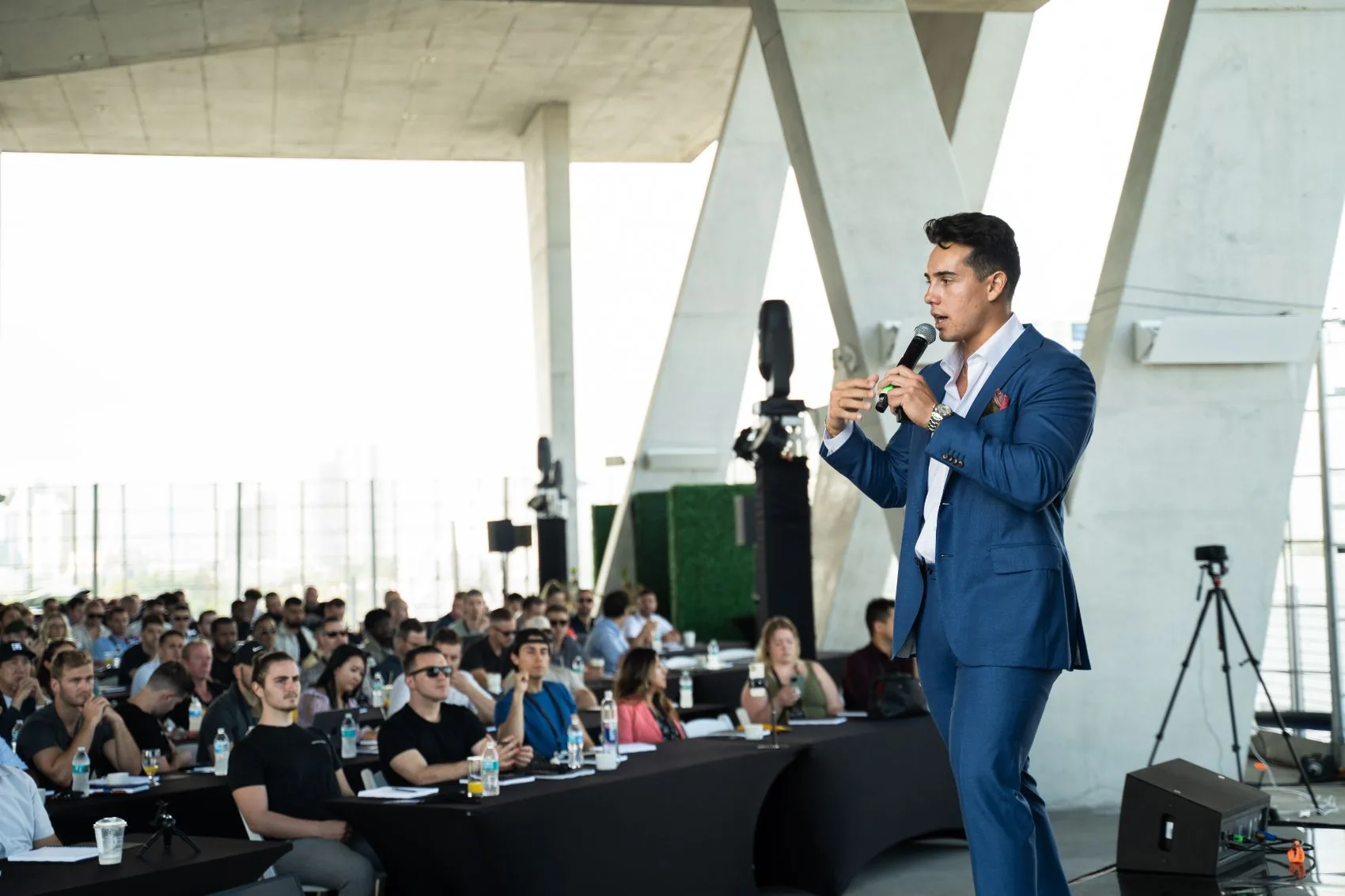
Live event production
Stage, light, sound and scenic, directed as one instrument.
Live event production is the technical delivery of a live event: the stage, lighting, sound, video and scenic, specified for the show, built and rehearsed. On the day it is run to a locked run of show. We direct all of it under one line of authority, with a dedicated show caller and a tech rehearsal before doors open.
What is live event production?
Live event production is everything the audience sees and hears from the moment doors open: the stage and set, the lighting, the sound, the screens and cameras, and the scenic that holds it together. It also covers what the audience never sees: the rigging, the power, the crew, the Day 0 rehearsal, and the run of show that decides what happens in which minute. Our run of show is tentative at 14 days out and locked at 7.
Most event planners oversee logistics. We engineer the room your audience decides in. In practice that means one team specifies every element of the production for the show you are putting on. It negotiates the production with local partners who know the venue, and directs it on the day through one show caller. The stage is drawn around the run of show rather than around what the venue has on a truss. The audio is designed for speech first, because a room that cannot hear clearly cannot be convinced.
We own no equipment, and that is deliberate. It lets us produce anywhere in the country through local, trusted partners, and it means the production is specified for your show rather than built from what sits in a warehouse. Our own background in audio visual production is the reference point: we know what equipment should cost in any market, and what a show needs against what a quote tends to include.
What is included in live event production
- 1
Technical direction
One technical direction for the whole room, from the first drawing to strike, so every department answers to the same plan.
- 2
Show calling
A dedicated show caller on the day, working in tandem with the Event Director and the production partner, calling every cue from the locked run of show.
- 3
Audio engineering
Speech-first sound design for the room, with delays and front fills so every seat hears clearly, headset microphones for speakers, and playback with a backup.
- 4
Lighting and LED
Lighting that makes the room feel like somewhere other than a ballroom, cued to the show's moments, and LED or projection sized to the room and its sightlines.
- 5
Live video and broadcast
Cameras for the screens in the room and a recorded cut of the stage, directed as a show. When the event calls for it, a stream for the audience that is not in the room.
- 6
Crew and vendor management
Every crew member and supplier on one schedule, briefed and directed by our team, with the AV contract negotiated down to what the show needs.
Who decides what
You decide the budget, the venue, the design, and each creative deliverable in writing. Inside the plan you approved, our team decides on the day, so the show never waits for a meeting.
What is not included
Venue power, internet, union labour and effects permits are arranged in the plan and paid to the venue or the authority that provides them. We produce the show. We do not sell the tickets or run your marketing.
How it works: the nine-phase event lifecycle
Live event production runs through all nine phases of the Iconic Standard. Three of them are where most of the production work happens.
- 01
Vision and Kickoff
The Vision Call sets what the room is for. The Event Playbook and tracker are set up within 24 hours of signing, and the kickoff call is held within five business days.
- 02
Venue and Hospitality
Five to eight venues scored on eight criteria and presented within two weeks. Rates, room blocks and attrition negotiated on your behalf.
- 03
Vendors and Production
AV and every supplier specified for the show, what it needs separated from what a quote tends to include, and the contracts negotiated down.
The production is specified here, before anything is rented: the stage drawn around the run of show, the audio designed for speech, the screens sized to the room. Then the quotes are read against it and negotiated down, usually by tens of thousands of dollars and sometimes by hundreds of thousands.
- 04
Attendee Experience
Registration, the waiver and the event brochure built and approved before a single ticket goes on sale.
- 05
Creative
The eight standard design deliverables, from badges and signage to splash screens and speaker cards, each approved in writing.
- 06
Program and Content
The floor plan, the speakers, the sponsors and the capture plan, written into one run of show.
- 07
Pre-Event Operations
The countdown from 60 days out: the tentative run of show at 14 days, the Playbook in every hand at 10, the final run of show locked at 7 and changed only in an emergency.
Load-in for a 1,000-person summit takes one to two days. It is planned into the countdown from the start, because too little time for load-in and setup is the failure we see most often in rooms we did not produce.
- 08
On Site
Day 0 is a full tech rehearsal. Show days are run by our show caller with the Event Director, so you spend the day with your audience, not in meetings.
Day 0 is a full tech rehearsal, at every event, so every piece of tech is proven before anyone stands on the stage. On show days the show caller calls the cues, the Event Director runs the room, and you get a short check-in each morning rather than a day of meetings.
- 09
Closeout
A client debrief within seven business days: what went right, what to fix, and the plan that makes the next event easier to sell. Your footage and final films follow.
Live event production vs event planning
An event planner organises the event: the venue, the catering, the schedule, the suppliers, and the good ones do it well. Production is a different job. It is the technical build and the live running of the show itself. It needs a technical direction, a show caller, and a Day 0 rehearsal with the stage, the screens, the audio and the speakers before doors open.
Many planners hire a production company for that part, and many production companies do only that part. We do both under one line of authority, and add the strategy and revenue work a production company does not offer: the strategy before anything is designed, and the revenue moment the room is built around. The difference shows on the day. There is one plan, one call sheet and one person to ask.
Proof: live event production in the room
Three rooms produced this way, with what changed in each.
- 01
PMU World 2025
Seminole Hard Rock Hotel & Casino, 2025 · 1,500 in the room
Focusing the show on one main stage saved $140,000 on AV and made room for more sponsor booths. Four days, recorded in 4K with an editor on site for daily recaps.
Read the case study - 02
The Sales Summit
Irving Convention Center at Las Colinas, 2026 · 700 in the room
The client's largest event after years of mostly virtual ones: three days at the Irving Convention Center built around live call reviews from the stage, opened with a gala on the terrace.
Read the case study - 03
CreatorHub Live
JW Marriott Orlando Bonnet Creek, 2025 · 1,500+ in the room
A hub model where other events ran their own stages inside CreatorHub, plus a Lamborghini painted live on the floor, for more than 1,500 creators and entrepreneurs.
Read the case study
Films from the room
3,000 people at the Broward County Convention Center. Our largest build to date, in four minutes.
Who live event production is for
- 01Summits & conferences
Multi-day rooms built as one arc, from the registration line to the close.
- 02Ascension masterminds
Smaller rooms, higher stake. The environment is engineered for the next tier to be offered and believed.
- 03Brand launches
A brand or an offer put in front of its audience in person for the first time, with the moment written into the run of show.
- 04Corporate events
Summits, sales kickoffs, leadership retreats, offsites and award nights, run to the minute so the agenda is what people remember.
- 05Single-day activations
One day with a reputation riding on it. Duration is not the qualifier. Stake is.
- 06Creator live events
A creator meeting the audience that has only ever known them through a screen. Trust is built in a room, not on a social feed.
Terms used on this page
- Run of show
- The minute-by-minute script of the event: every cue, walk-on, video and transition, in order. Tentative at 14 days out, locked at 7.
- Show caller
- The person who calls each cue to the crew during the show, so lighting, sound, video and the stage move together.
- Day 0
- The day before the first show day, given over to a full technical rehearsal with the stage, the screens, the audio and the speakers.
- Technical direction
- Ownership of the whole technical build, from drawings and specification through load-in, show and strike.
- Load-in
- The days when the stage, rigging, screens, lighting and sound are brought into the venue and built. One to two days for a 1,000-person summit.
Questions about live event production
What does a live event production company do?
It designs, builds and runs the technical side of a live event: the stage, lighting, sound, video, screens and scenic, plus the crew and the rehearsal. We add the direction on top: one technical direction for the room, a show caller on the day, and the strategy and revenue work a production company does not offer.
How far in advance do we need to book live event production?
Most clients bring us in 8 to 10 months before the event, and that is the lead time we design for: it leaves room to choose the venue and the dates as strategy decisions rather than defaults. Thirty days is the floor. We take a full production on at that notice as an emergency, and some experiences can be done in less depending on their complexity.
How long does load-in take for a 1,000-person summit?
One to two days, followed by Day 0, a full tech rehearsal. Too little time for load-in and setup is the problem we see most often in events we did not produce, so the days are planned into the countdown from the start.
Do you bring your own equipment?
No, and on purpose. Owning nothing lets us produce anywhere in the country through local partners who know the venue, and specify the production for your show rather than for a warehouse. Our AV background means we know what equipment should cost in any market.
Who runs the show on the day?
A dedicated show caller, assigned to the event, calls the cues, working in tandem with the Event Director and the production partner. Your event day is treated like a wedding day, and you should not spend it in meetings with the coordinator. So before the event there is a State of the Union with your team, so everyone shares one objective. Everyone receives the Event Playbook, and on show days you get short check-ins.
What goes wrong most often at live events, and how do you prevent it?
Two things. Not enough time planned for load-in, setup and deliveries, and no breaks for the attendees. Agendas packed to the edge leave no room to breathe, so attendees end up overwhelmed and the client spends more than they needed to. We design both out: time for the build, and air in the schedule.
How much does live event production cost?
We charge a management fee, fixed at the outset and tied to scope. The production itself is specified for your show and negotiated with the production partners. Separating what the show needs from what a quote tends to include usually brings the AV contract down by tens of thousands of dollars, and sometimes by hundreds of thousands.
Who is on the team for a live event?
The same six roles on every event: an Event Director, an Event Coordinator, an Experience Officer, a Sponsor Liaison, a Production Director and a Media Lead. For the show itself we add a dedicated show caller, and the production crew comes from local partners who know the venue.
What size of event do you produce?
Rooms from 20 people to 3,000. The largest to date was a 3,000-person conference built on a 90-foot LED wall with six rigged delay screens; the smallest are masterminds of a few dozen.
How long have you been producing live events?
Since 2017, when we were founded in Miami. We have produced in the United States, the United Kingdom, Spain, the United Arab Emirates, Mexico and Costa Rica.
Do you produce events outside Florida?
Yes. Borders do not define our range. We have produced events in six countries, the United States, the United Kingdom, Spain, the United Arab Emirates, Mexico and Costa Rica, and we can expand to more without issue. We own no equipment, which is what lets us produce anywhere through local partners who know the venue, with the same team, the same run of show and the same Day 0 rehearsal. Miami is our headquarters and Las Vegas our second base.
Discuss your live event production.
Tell us the event, the dates and the room you have in mind on the quote form. A director replies within 48 hours with the questions we need answered before a Vision Call.