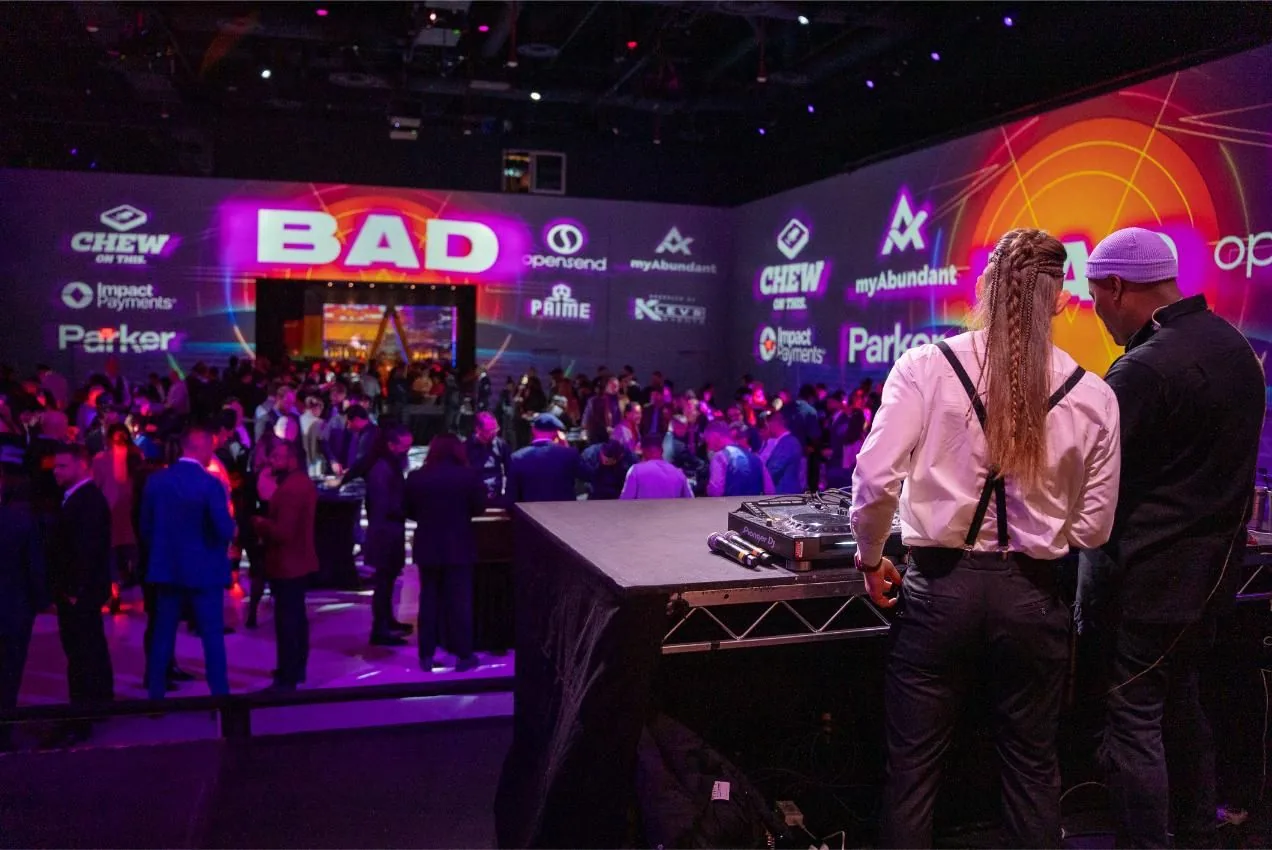
Audio visual event production
Stage, light, sound and scenic, directed as one instrument.
Audio visual event production is the design, supply and operation of the sound, video, LED and lighting for a live event. We specify every element for the show you are putting on, read the quotes against that specification and negotiate the contract down, then rehearse the room on Day 0 and run it through one show caller.
What is audio visual event production?
Audio visual event production, AV for short, is the sound system, the microphones, the LED walls and projection, the cameras, the lighting rig and the people who operate them. For a room of 3,000 that can mean a 90-foot LED wall, six rigged delay screens, more than fifty line array cabinets, four broadcast cameras and about 180 lighting fixtures. For a room of 200 it is a fraction of that. In both cases the question is the same: what does this show need?
Most AV quotes answer a different question: what can be rented. We start from the run of show and specify the system for it. Audio is designed for speech first, with delays and front fills so every seat hears clearly and headset microphones so speakers can move. Screens are sized to the room and its sightlines. Lighting is cued to the moments in the show rather than left as a wash. Then the quotes are read against that specification, what the show needs is separated from what a quote tends to include, and the contract is negotiated down, usually by tens of thousands of dollars and sometimes by hundreds of thousands.
We own no equipment, and that is deliberate. It means we can produce anywhere in the country through local partners who know the venue, and it means we are specifying for your show rather than for a warehouse. Our own background in audio visual production is the reference point: we know what equipment should cost in any market. Our clients range from first-time producers to teams with seasoned AV partners of their own, and both leave an engagement knowing what their show needs and why.
What is included in audio visual event production
- 1
AV specification
A written specification for the show: audio, video, LED, lighting, rigging, power and crew, drawn from the run of show before anything is quoted.
- 2
Contract negotiation
The quotes read against the specification, what the show needs separated from what a quote tends to include, and the contract negotiated down. You sign it; we align the vision and do the negotiating.
- 3
Audio engineering
Speech-first sound design, delays and front fills for every seat, headset microphones for speakers, playback with a backup, and a redundant network on a flagship build.
- 4
LED and projection
Walls and screens sized to the room and the sightlines, with the processing, the graphics machines and their backups, and confidence monitors for the stage.
- 5
Lighting design
A rig that makes the room feel like somewhere other than a ballroom, cued to the show's moments on a console, with haze, gobos and effects where the show calls for them.
- 6
Technical direction and show calling
One technical direction for the room from the first drawing to strike, a full tech rehearsal on Day 0, and a dedicated show caller on show days.
Who decides what
You decide the budget, the look and each creative deliverable in writing. We specify the system, negotiate it and direct it; inside the plan you approved, our team decides on the day.
What is not included
Venue power, internet, union labour and effects permits are arranged in the plan and paid to the venue or the authority that provides them. We produce the show; we do not sell the tickets or run your marketing.
How it works: the nine-phase event lifecycle
Audio visual event production runs through all nine phases of the Iconic Standard. Three of them are where the AV work is decided.
- 01
Vision and Kickoff
The Vision Call sets what the room is for. The Event Playbook and tracker are set up within 24 hours of signing, and the kickoff call is held within five business days.
- 02
Venue and Hospitality
Five to eight venues scored on eight criteria and presented within two weeks. Rates, room blocks and attrition negotiated on your behalf.
- 03
Vendors and Production
AV and every supplier specified for the show, what it needs separated from what a quote tends to include, and the contracts negotiated down.
The specification is written here, before anything is rented, and the quotes are negotiated against it. A client who arrives with an AV partner of their own keeps them; we still read the quote against what the show needs.
- 04
Attendee Experience
Registration, the waiver and the event brochure built and approved before a single ticket goes on sale.
- 05
Creative
The eight standard design deliverables, from badges and signage to splash screens and speaker cards, each approved in writing.
- 06
Program and Content
The floor plan, the speakers, the sponsors and the capture plan, written into one run of show.
The floor plan, the stage drawings and the renders come together with the run of show, so the screens, the cameras and the lighting cues are designed for the moments that matter: the walk-ons, the reveals, the offer.
- 07
Pre-Event Operations
The countdown from 60 days out: the tentative run of show at 14 days, the Playbook in every hand at 10, the final run of show locked at 7 and changed only in an emergency.
- 08
On Site
Day 0 is a full tech rehearsal. Show days are run by our show caller with the Event Director, so you spend the day with your audience, not in meetings.
Day 0 is a full tech rehearsal at every event, so every microphone, screen and cue is proven before anyone stands on the stage. On show days the show caller calls the cues with the Event Director and the AV partner.
- 09
Closeout
A client debrief within seven business days: what went right, what to fix, and the plan that makes the next event easier to sell. Your footage and final films follow.
Audio visual production vs an AV rental
An AV rental house supplies and operates equipment, and the good ones do it well. The quote is built from what they have and what they have been asked for, and a client who does not know what a show needs will usually be quoted more than it needs.
We sit on the client's side of that quote. We write the specification first, read the quote against it, and negotiate the contract down to what the show needs. On the day we direct the room through one show caller, so the AV partner, the stage and the speakers move together. The rental house is still in the room. The difference is who decided what it would be.
Proof: audio visual event production in the room
Four rooms, and what the AV decision changed in each.
- 01
Women and Wealth 2026
Broward County Convention Center, 2026 · 3,000 in the room
Our largest build to date: a 90-foot LED wall of 440 panels at 2.6 mm pitch, six rigged delay screens on laser projectors so all 3,000 could see, flown line arrays with ten subs, four broadcast cameras with six channels of record, about 180 lighting fixtures, 34 chain motors and 70 sections of truss, and cold sparks and CO2 on the entrances. Built hand in hand with a local AV provider over three days of load-in and rehearsal, two show days and a day of strike.
- 02
PMU World 2025
Seminole Hard Rock Hotel & Casino, 2025 · 1,500 in the room
Focusing the show on one main stage saved $140,000 on AV and made room for more sponsor booths. Everything was recorded in 4K with an editor on site for daily recaps.
Read the case study - 03
Fast Start Forum 2026
Seminole Hard Rock Hotel & Casino, 2026 · 473 in the room
Moved to the Guitar Hotel with a full sponsor hall and the event's own logo on the building, built for a room that more than doubled to 473.
Read the case study - 04
Freedom Queen Live 2025
The Vinoy, 2025 · 530 in the room
A Broadway-style show rather than a conference: every dance number cued to the AV and the stage, rehearsed around the speakers, and kept a surprise until the flash mob opened the event.
Read the case study
Films from the room
The 90-foot LED wall, the six delay screens, the flown arrays and the lighting rig, as the room saw them.
Year two at the Seminole Hard Rock: the room halved, one stage, and a sponsor hall.
Who audio visual event production is for
- 01Summits & conferences
Multi-day rooms built as one arc, from the registration line to the close.
- 02Ascension masterminds
Smaller rooms, higher stake. The environment is engineered for the next tier to be offered and believed.
- 03Brand launches
A brand or an offer put in front of its audience in person for the first time, with the moment written into the run of show.
- 04Corporate events
Summits, sales kickoffs, leadership retreats, offsites and award nights, run to the minute so the agenda is what people remember.
- 05Single-day activations
One day with a reputation riding on it. Duration is not the qualifier. Stake is.
- 06Creator live events
A creator meeting the audience that has only ever known them through a screen. Trust is built in a room, not on a social feed.
Terms used on this page
- Delay screens
- Screens placed deeper in a large room, fed with the same picture, so the back rows see what the front rows see.
- Front fill
- Small speakers along the front of the stage that cover the first rows the main arrays fire over.
- Line array
- A column of speaker cabinets flown above the stage, shaped so the sound reaches the back of the room as clearly as the front.
- Pixel pitch
- The distance between an LED wall's pixels, in millimetres. 2.6 mm reads sharply from a few metres; the larger the number, the further back a viewer needs to be.
- Confidence monitor
- A screen facing the stage that shows the presenter their notes, the clock and the next slide.
- Show caller
- The person who calls each cue to the crew during the show, so lighting, sound, video and the stage move together.
Questions about audio visual event production
What does audio visual event production include?
Sound, microphones, LED walls and projection, cameras, lighting and the crew who operate them, plus the rigging and power they need. We add the specification before anything is quoted, the negotiation of the contract, a full tech rehearsal on Day 0 and a show caller on the day.
Do you own the AV equipment?
No, and on purpose. Owning nothing lets us produce anywhere in the country through local partners who know the venue, and specify the system for your show rather than for a warehouse. Our own background in audio visual production means we know what equipment should cost in any market.
How do you keep AV costs down?
By writing the specification first and reading the quote against it. What the show needs is separated from what a quote tends to include, and the contract is negotiated down, usually by tens of thousands of dollars and sometimes by hundreds of thousands. You sign the AV contract yourself; we align the vision with you, then negotiate it. Our fee is a management fee, fixed at the outset and tied to scope.
We already have an AV partner. Can you work with them?
Yes. Our clients range from first-time producers to teams with seasoned AV partners, and the partner stays. We still write the specification, read their quote against it, and direct the room on the day so the partner, the stage and the speakers move together.
What do you insist on for sound in a speech-led room?
Delays and front fills so every seat hears clearly, headset microphones so speakers can move, playback with a backup, and on a flagship build a redundant audio network. A room that cannot hear clearly cannot be convinced.
What was your largest AV build?
Women and Wealth 2026 at the Broward County Convention Center, for 3,000 people: a 90-foot LED wall of 440 panels, six rigged delay screens, more than fifty line array cabinets, four broadcast cameras, about 180 lighting fixtures and 34 chain motors, with cold sparks and CO2 on the entrances.
Is a backup system standard?
On a flagship build we specify a redundant audio network, backup playback and graphics machines, and a backup record feed, and Day 0 proves all of it before doors open. On a smaller show the backups are sized to what a failure would cost the room.
How far in advance should AV be specified?
Most clients bring us in 8 to 10 months before the event, and the AV is specified once the venue and the run of show are known. Thirty days is the floor for a full production, taken on as an emergency.
Where do you produce?
Yes. Borders do not define our range. We have produced events in six countries, the United States, the United Kingdom, Spain, the United Arab Emirates, Mexico and Costa Rica, and we can expand to more without issue. We own no equipment, which is what lets us produce anywhere through local partners who know the venue, with the same team, the same run of show and the same Day 0 rehearsal. Miami is our headquarters and Las Vegas our second base.
Discuss the AV for your event.
Tell us the event, the room and the dates on the quote form, and send the AV quote you have if there is one. A director replies within 48 hours.